
If you think a fresh coat of paint will hide your old layout, you’re setting your facility up for a costly failure. Improper warehouse line removal often leaves behind “ghost lines” that confuse forklift operators and lead to OSHA citations during safety audits. You know that reconfiguring your floor plan is a high stakes operation where every hour of downtime impacts your bottom line. It’s frustrating when you’re caught between the need for a clean slate and the fear of pitting your concrete or contaminating your sensitive inventory with silica dust.
Since 1994, we’ve refined the process of technical surface preparation to ensure your slab remains intact while achieving the correct CSP (concrete surface profile, or the roughness of the floor) for maximum adhesion. This guide will show you how to eliminate old markings without compromising your operational schedule or air quality. We’ll break down the specific benefits of diamond grinding, the importance of dust-free shot blasting, and the exact steps to prepare your floor for a long lasting epoxy finish that stands up to heavy traffic.
Key Takeaways
- Understand why professional warehouse line removal is essential to prevent delamination (new paint peeling off old layers) and eliminate safety hazards.
- Compare industrial-strength mechanical techniques, such as shot blasting and diamond grinding, to determine the most effective method for your specific slab type.
- Learn how to achieve the correct Concrete Surface Profile (CSP)—the specific “roughness” of the concrete—to ensure maximum adhesion for new markings.
- Explore how modern HEPA vacuum systems capture 99.9% of dust, allowing for critical surface preparation without requiring a total facility shutdown.
- Gain insights from nearly 30 years of industrial experience to optimize your facility layout for high-traffic forklift environments and long-term durability.
Why Professional Warehouse Line Removal is Essential for Facility Efficiency
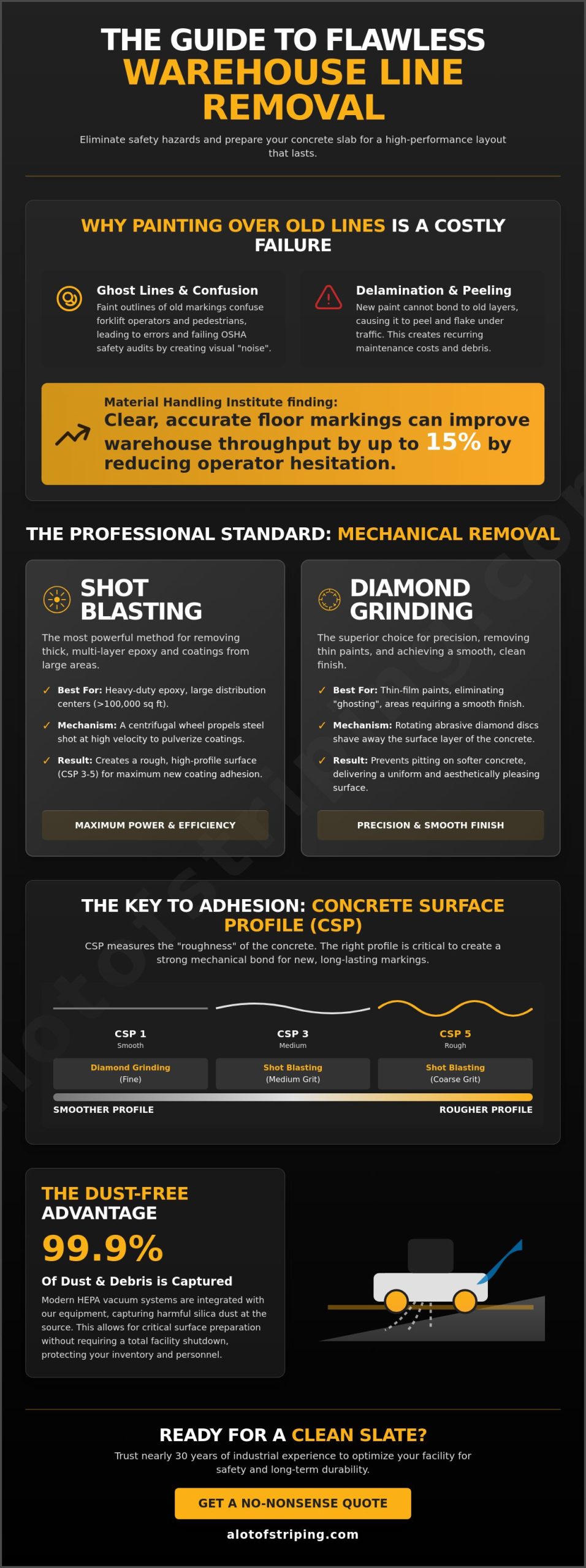
Since 1994, we’ve helped facility managers navigate the logistical stress of layout reconfigurations. Effective warehouse line removal is the first step in ensuring a safe, high-performance environment. When you simply paint over existing markings, you risk delamination (the process where new paint peels away because it can’t bond to the old layer). This creates a recurring maintenance cost that drains your budget. Professional removal ensures the new markings adhere directly to the concrete substrate, providing the durability needed for heavy forklift traffic. A 2022 study by the Material Handling Institute found that clear, accurate floor markings can improve warehouse throughput by 15% by reducing operator hesitation.
- Old markings create confusion during 2024 facility safety audits.
- Residual paint chips can jam automated picking sensors, leading to expensive equipment downtime.
- Outdated traffic patterns cause forklift operators to make split-second errors in high-pressure zones.
- Clean removal is a technical prerequisite for high-performance epoxy adhesion and long-term durability.
The Risks of “Ghosting” and Outdated Markings
Ghosting refers to the faint, visible outline remaining after paint is scraped away. This happens because the concrete under the paint has a different texture and color than the surrounding floor. In high-traffic pedestrian zones, these shadows fail OSHA inspections because they create visual “noise” that confuses workers about the actual path of egress. Our safety, quality, and communication triad ensures we address these shadows through precision grinding. Without proper removal, paint chips can break loose and contaminate automated picking systems. These systems often require 99.9% debris-free environments to function correctly, and loose paint is a primary culprit for sensor failure.
Surface Integrity vs. Simple Erasure
Removing the color is only half the job. You must prepare the substrate for its next life. Chemical strippers often fail in heavy industrial environments because they leave an oily residue that prevents new epoxy from sticking. We use mechanical methods like Abrasive blasting and diamond grinding to achieve the proper concrete profile (roughing up the smooth surface). This creates a professional, clean facility aesthetic that signals operational excellence to your clients. It’s a no-nonsense approach that values your time. If you need a partner who understands these high stakes, you can text us directly to discuss your project specifics and get your facility back to peak efficiency.
Mechanical Removal Techniques: Shot Blasting vs. Diamond Grinding
Mechanical removal is the industry standard for professional warehouse line removal when dealing with industrial-strength epoxy and high-performance coatings. Since 1994, our team has found that chemical strippers often fail to penetrate the cross-linked polymers found in modern 100% solids epoxy (a dense coating designed for extreme durability). Instead, we utilize mechanical force to physically separate old markings from the concrete substrate. This approach ensures the new layout adheres properly to a clean, profiled surface that’s ready for long-term use.
Shot Blasting for Heavy-Duty Epoxy
Shot blasting is a self-contained, dust-free mechanical process that uses a centrifugal wheel to propel steel grit at the floor. It’s the most effective method for removing thick, multi-layer epoxy lines in large distribution centers exceeding 100,000 square feet. This process creates a high-profile texture, which involves roughing up the smooth surface, to ensure a maximum mechanical bond for the new coating. By adjusting the travel speed and shot size, we achieve a Concrete Surface Profile (CSP) of 3 to 5. The machine’s internal vacuum system recycles the steel shot while collecting debris, making it a highly efficient choice for rapid turnaround times in active facilities.
Diamond Grinding for Precision and Smoothness
Diamond grinding uses rotating abrasive discs to shave the surface down. It’s the superior choice for thin-film paints and areas where a smooth finish is required for aesthetic or functional reasons. This method prevents the pitting or “corn-rowing” that aggressive shot blasting can cause on softer concrete slabs. Diamond grinding effectively shaves the concrete to remove stubborn stains and “ghosting,” which are the faint shadows left behind by old markings. Because this method produces fine particulates, we strictly follow OSHA guidelines on silica dust by using industrial HEPA-filtered vacuums. These systems capture 99.97% of dust at the source, protecting your inventory and your employees’ health.
Choosing the right method depends on the existing coating thickness and the current slab condition. A 20-mil epoxy coating requires the impact of shot blasting, while a 3-mil latex paint is easily handled by a 30-grit diamond segment. If you’re uncertain which technique fits your facility, you can consult with our team to evaluate your floor’s specific requirements. We prioritize functional outcomes that keep your operations running safely and efficiently.
Understanding CSP: The Key to Successful Re-Striping
Successful warehouse line removal is not just about erasing old markings; it’s about engineering the floor to accept new materials. We use Concrete Surface Profile (CSP) to measure the roughness of the slab. Since 1994, our team has recognized that achieving the correct texture is the single most important factor in coating longevity. For most industrial epoxy applications, we target a CSP 2 or 3. This specific range provides enough “bite” for the resin to bond without requiring excessive product to fill deep gouges. Failure to reach this profile often leads to premature peeling within the first 6 to 12 months of service.
Professional contractors rely on standards set by the International Concrete Repair Institute (ICRI) to verify surface preparation. These standards replace guesswork with measurable benchmarks. If a surface is too smooth, the new lines will sit on top of the concrete rather than becoming part of it. This creates a weak point that 5,000-pound forklifts will eventually exploit, leading to delamination and safety hazards in high-traffic zones.
The Physics of Mechanical Adhesion
Smooth, power-troweled concrete is the enemy of durable floor markings. To ensure a permanent bond, we must “open the pores” of the slab. This process allows the epoxy to anchor into the concrete substrate (the structural layer of the floor). During mechanical removal, our crews follow OSHA’s respirable crystalline silica standard to manage dust while we grind the surface to the required depth. A deeper profile increases the surface area for the epoxy to grab, which directly extends the lifespan of the new line by up to 300% compared to unprepared surfaces.
Testing the Surface After Removal
We don’t rely on visual checks alone. Our technicians use tactile profiling with ICRI chips, which are physical samples that represent each CSP level. This ensures the warehouse line removal process has reached the necessary depth across the entire path. We also check for three critical factors:
- Laitance: This is a weak, milky layer of cement dust and water that rises to the top during curing. It must be removed because it lacks structural integrity.
- Contaminants: We test for oils, grease, or chemicals that have soaked into the slab, as these act as bond-breakers.
- Moisture: High moisture levels can cause epoxy to bubble or lift, requiring specialized primers if levels exceed 4% moisture content.
By adhering to our safety, quality, and communication triad, we ensure that your facility remains compliant and your investment is protected. This no-nonsense approach to surface preparation is why we’ve remained a trusted partner for industrial managers for nearly three decades.
Operational Logistics: Managing Dust, Noise, and Downtime
Professional warehouse line removal doesn’t require a total facility shutdown. We understand that every hour of downtime impacts your bottom line, which is why our process prioritizes operational continuity. Since 1994, we’ve refined our methods to work around active 24/7 logistics environments. We utilize modern equipment with integrated HEPA vacuum systems to capture 99.9% of dust at the source, specifically filtering particles as small as 0.3 microns. This keeps your inventory clean and your employees safe from respiratory hazards.
We typically schedule removal during off-shifts or low-traffic periods to minimize disruption. Noise management is another priority for facilities with adjacent office spaces or call centers. Our crews use acoustic dampening techniques and electric-powered machinery where possible to keep decibel levels within acceptable limits for administrative staff. It’s a service-plus-benefit approach that delivers clean floors without sacrificing your daily output. We focus on the physical realities of your facility to ensure our presence is felt through results, not through interference.
Dustless Technology for Sensitive Environments
Food-grade and pharmaceutical facilities require specialized dust containment to meet FDA and SQF (Safe Quality Food) standards. Standard industrial equipment often lacks the necessary seals to prevent cross-contamination. We use shrouded grinders (equipment with a vacuum-sealed perimeter skirt) to trap debris before it ever enters the air. This process maintains strict air quality while removing hazardous old coatings or failed epoxy. We focus on concrete profiling (roughing up the smooth surface) to ensure the next coating bonds perfectly, all while keeping the environment sterile and compliant with industry regulations.
Phased Removal for Active Logistics Hubs
We segment the warehouse into designated work zones to keep forklift traffic flowing. In a typical 100,000 square foot facility, we might isolate 20,000 square feet at a time. This ensures that 80% of your floor remains fully operational. Clear communication between our lead contractor and your floor manager is the anchor of our safety, quality, and communication triad. We provide a detailed map of the work area and plan for immediate re-striping so safety lines and paths of egress (designated exit routes) are never missing for more than a single shift. This phased approach allows for warehouse line removal to happen in the background of your peak shipping season.
Our commitment to transparency means you’ll know exactly when each zone will be returned to service. If you need to update your floor plan without stopping production, contact StripeGuys for a phased project estimate today.
Why StripeGuys is the Trusted Partner for Nationwide Line Removal
StripeGuys has navigated the industrial flooring industry since 1994. We’ve spent nearly three decades refining our approach to the physical realities of forklift environments. Warehouse floors endure constant stress from heavy machinery, often exceeding 12,000 pounds of point-load pressure. We don’t just scrape off old paint; we utilize specialized shot blasting and diamond grinding equipment for every slab type. This ensures your warehouse line removal project results in a surface ready for permanent bonding.
Our team provides nationwide coverage, managing high-profile projects from coast to coast. We prioritize the “Safety, Quality, Communication” triad on every job site to alleviate the logistical stress facility managers face. This means we show up on time, follow OSHA protocols strictly, and keep you informed of our progress in real-time. We maintain a no-nonsense attitude that values your time and operational needs above all else.
- Shot Blasting: We use this to strip away old coatings while “roughing up the smooth surface” (concrete profiling) to ensure new markings adhere correctly.
- Diamond Grinding: This method is ideal for removing thin-film paints and smoothing out imperfections in the slab without damaging the underlying structure.
- Nationwide Mobility: Our crews are equipped to mobilize quickly to any facility across the United States, handling everything from 50,000 to 1,000,000 square foot facilities.
Industrial Expertise Since 1994
Facility managers trust our functional approach because we’ve been a specialized contractor for large-scale facilities for 29 years. We handle complex warehouse line removal tasks in active distribution centers and manufacturing plants where precision is mandatory. Our experience allows us to work around your production schedules, often operating during night shifts or holiday weekends to prevent operational downtime. We understand the high stakes of industrial environments and focus on delivering durable, long-term results that withstand heavy traffic.
Start Your Facility Reconfiguration Today
Professional surface preparation is the only way to guarantee your new epoxy striping lasts for years instead of months. By hiring a single-source contractor for both removal and re-striping, you eliminate the risk of vendor conflict and ensure a seamless transition. We offer the technical expertise of subject matter experts combined with the grit of a hardworking industrial veteran. Don’t let old, confusing floor markings compromise your facility’s safety or paths of egress. Contact StripeGuys for a professional line removal quote and let us handle the heavy lifting of your next facility reconfiguration.
Optimize Your Facility with Precision Surface Preparation
Effective facility management requires more than just a fresh coat of paint. It demands a precise approach to surface preparation through mechanical methods like shot blasting or diamond grinding. These techniques achieve the specific Concrete Surface Profile (CSP) needed for long-term coating adhesion. By prioritizing specialized dustless HEPA-filtered equipment, you protect your inventory and employees from airborne particulates while maintaining tight operational schedules.
Since 1994, StripeGuys has delivered these high-stakes results for large-scale facilities across the country. Our team brings nearly 30 years of industrial experience to every project, ensuring your warehouse line removal is handled with technical precision and safety in mind. We provide nationwide service that prioritizes your budget and your timeline, allowing you to focus on your core operations without logistical stress. Our commitment to the safety, quality, and communication triad ensures that your facility remains organized and efficient from the first grind to the final stripe.
Get a Professional Warehouse Line Removal Quote from StripeGuys
Your facility deserves a surface that’s prepared to last.
Frequently Asked Questions
Is it better to grind or shot blast warehouse lines?
Diamond grinding is the superior choice for most warehouse line removal projects because it provides a smooth finish without pitting the concrete. While shot blasting (firing steel beads at the floor) is effective for heavy industrial coatings, it often leaves a profile that is too aggressive for standard re-striping. Our team has used diamond grinding since 1994 to ensure the floor remains level and ready for new markings.
How much does warehouse line removal typically cost per foot?
Industry averages for professional line removal typically range from $1.50 to $4.00 per linear foot based on 2023 market data from industrial flooring associations. These rates vary depending on the coating thickness and the total linear footage of the project. We provide transparent, fixed-price quotes after a site walk-through to ensure your budget remains intact and there are no hidden fees during the process.
Can I remove warehouse lines myself with a rental machine?
Rental machines often lack the vacuum pressure and industrial weight needed for efficient warehouse line removal, which leads to airborne silica dust and uneven floor surfaces. Professional-grade equipment used by our specialists operates at 480 volts and captures 99.9 percent of debris. Attempting this as a DIY project often results in “ghosting” (shadows of old lines) that prevents new paint from bonding correctly.
What happens if we just paint over the old warehouse lines?
Painting over old lines creates a bond failure because the new layer cannot adhere to the existing glossy finish. This leads to chipping within 3 to 6 months in high-traffic forklift zones. Removing the old material ensures the new lines meet OSHA safety standards for visibility and durability, preventing the logistical stress of frequent maintenance shutdowns.
How long does the line removal process take for a standard warehouse?
A specialized three-person crew can typically remove 1,500 to 2,500 linear feet of markings in a single 8-hour shift. For a standard 50,000 square foot facility, the process usually concludes within 2 to 3 days. We offer day and night availability to minimize operational downtime, ensuring your paths of egress are ready for immediate re-striping.
Will line removal leave permanent marks on my concrete floor?
Mechanical removal will leave a “shadow” or profile on the concrete where the previous coating protected the surface from wear. This process involves concrete profiling (roughing up the smooth surface) to ensure the next application bonds permanently. Since 1994, we’ve refined our diamond grinding techniques to make these marks as clean and uniform as possible for a professional aesthetic.
Is line removal a dusty process, and will it contaminate my inventory?
Professional warehouse line removal is a nearly dustless process when performed with HEPA-filtered vacuum systems. Our equipment utilizes a closed-loop system that captures 99.97 percent of particles down to 0.3 microns. This high level of containment protects your inventory and sensitive electronics, maintaining the safety and quality standards your facility requires during the renovation.
Do I need to clean the floor before the removal team arrives?
You should clear all pallets and equipment at least 5 feet away from the lines, but our team handles the technical surface preparation. We use industrial scrubbers to remove grease and oils that could interfere with the grinding process. Our commitment to communication means we’ll text you a checklist 24 hours before we arrive so your team is fully prepared for the project.