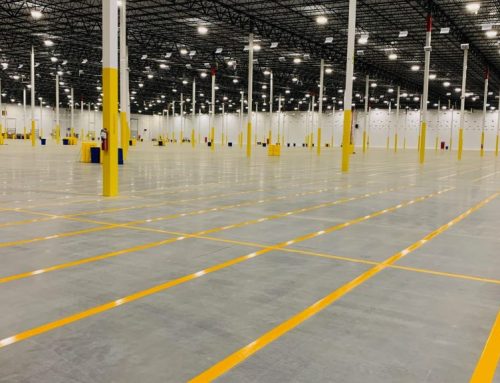
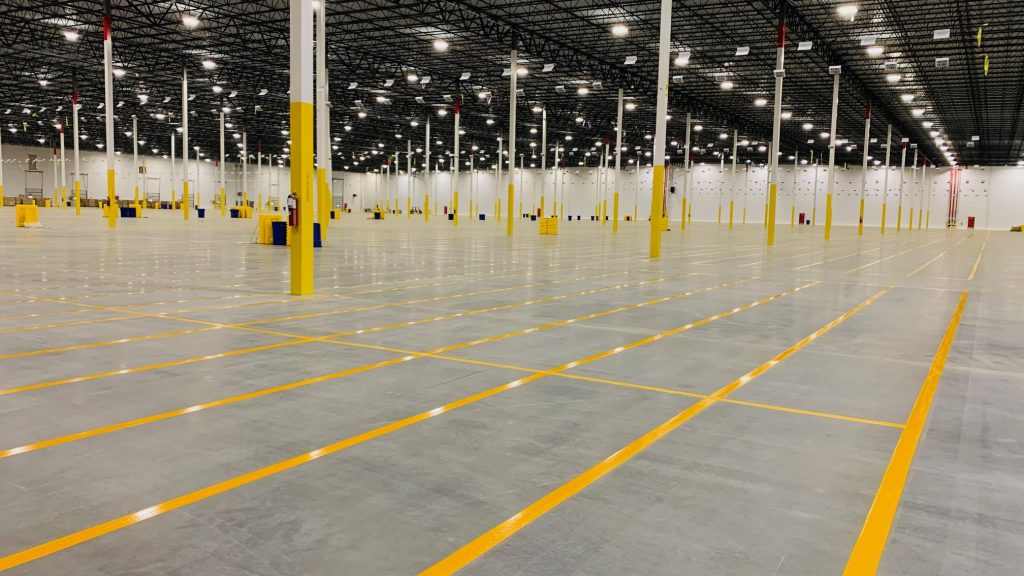
Forklift lane striping is one of the most important layout controls in an active warehouse. Clear travel lanes help separate vehicles from pedestrians, reduce hesitation at intersections, and give facility teams a more organized way to move pallets, stage inventory, and protect emergency-access routes.
At StripeGuys, we use forklift lane striping to support safer traffic flow, better visibility, and more durable warehouse floor marking systems. If you need a full service overview, visit our Warehouse Floor Striping Company page. If your main focus is aisle organization and route definition, review our Warehouse Line Striping Company page.
Why forklift lane striping matters in warehouses
Forklifts, pallet jacks, pedestrians, and staged materials all compete for space on the same floor. Without clearly marked lanes, operators are forced to improvise around corners, dock doors, staging zones, and battery-charging areas. That often leads to wasted motion, blocked aisles, and a higher risk of collisions.
Well-planned forklift lane striping creates designated routes, visual buffer zones, and safer crossing points. It also helps supervisors maintain more consistent traffic rules across shifts and across multiple buildings.
Core layout elements to include
Most warehouse forklift lane systems should include main travel aisles, secondary feeder lanes, pedestrian walkways, no-storage buffer zones, staging outlines, and clearly marked intersections. High-traffic areas often benefit from directional arrows, stop bars, and high-visibility edge markings near dock positions or equipment charging zones.
The correct layout depends on your forklift type, turning radius, pallet dimensions, rack spacing, and the amount of pedestrian activity on the floor. That is why lane striping should be treated as a facility-planning task, not just a paint application.
How aisle width and traffic volume affect striping decisions
Not every forklift route should be striped the same way. Wider main aisles may need stronger lane-edge definition and intersection controls, while narrower feeder aisles may require simplified markings that prevent confusion and keep operators centered in the usable travel path.
Facilities with constant forklift movement usually need more durable coatings and better surface preparation. In lower-traffic areas, the marking system can sometimes be simpler, but it should still support visibility, consistency, and maintenance planning.
Forklift lanes and pedestrian safety
One of the biggest benefits of forklift lane striping is that it helps create physical separation between people and equipment. Warehouses should use marked walkways, designated crossing points, and visible buffer zones where pedestrian movement overlaps with vehicle traffic. These visual controls make it easier for workers to recognize where they should walk and where equipment has priority.
When these markings are combined with facility rules, signage, and good housekeeping, they support a safer warehouse environment and a more reliable inspection posture.
Paint, epoxy, or tape for forklift lanes?
The best material depends on traffic intensity and floor condition. In many industrial warehouses, professionally applied striping systems outperform temporary marking products because they are designed for heavier wear and better long-term value. If you are comparing options, see our related guide on epoxy vs. tape striping for warehouses.
Frequently asked questions about forklift lane striping
How often should forklift lanes be restriped?
That depends on traffic volume, floor condition, and material choice. High-traffic facilities usually need regular inspections so worn intersections, turn areas, and dock approaches can be refreshed before the layout becomes hard to read.
What color should forklift lanes be?
Color use should stay consistent with your facility standards and safety program. The most important factor is consistency across the building so employees can interpret routes, walkways, and hazard zones quickly.
Can forklift lanes be added without shutting down the whole warehouse?
Yes. Many projects can be phased by zone, aisle, or shift so striping work happens in planned sections while the rest of the building continues operating.
Need help planning warehouse traffic lanes?
If you need help laying out travel aisles, pedestrian zones, dock lanes, or durable safety markings, contact StripeGuys for a project review. You can also explore our main Warehouse Floor Striping Company and Warehouse Line Striping Company service pages for more detail.