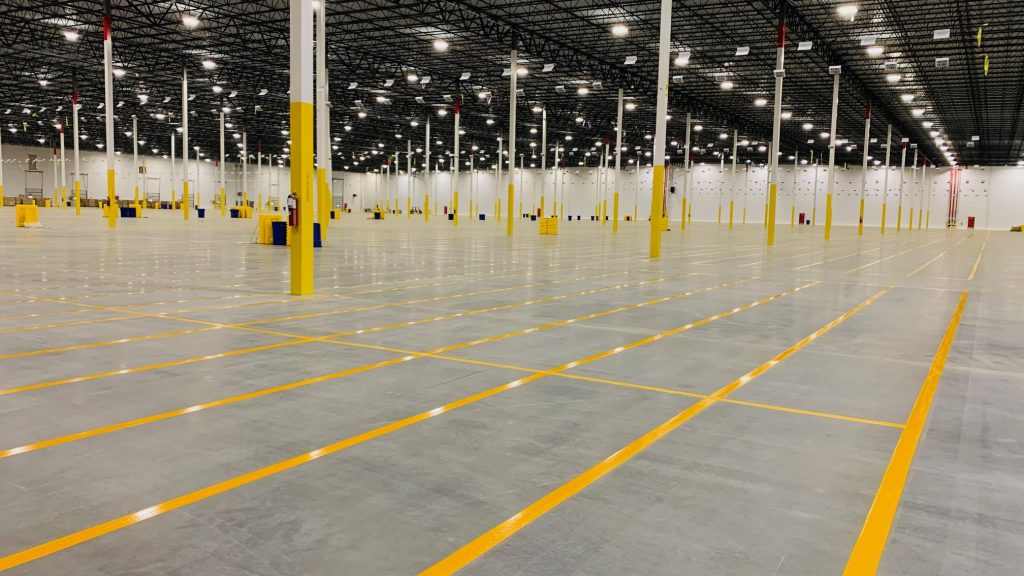
Warehouse floor marking is one of the most important visual-control systems inside an industrial facility. Good markings help separate pedestrians from forklift traffic, define storage boundaries, organize staging zones, and create a cleaner operating rhythm throughout the building. When layouts are planned carefully and materials are selected correctly, floor markings improve both safety and efficiency.
At StripeGuys, we work with warehouses, distribution centers, and industrial facilities that need durable floor marking systems built for real traffic conditions. If you are looking for a contractor to handle a complete floor-marking project, start with our Warehouse Floor Striping Company page. If your main focus is aisle organization and traffic-lane definition, our Warehouse Line Striping Company page is also a strong resource.
What warehouse floor marking includes
Floor marking often covers travel lanes, pedestrian walkways, pallet staging areas, keep-clear zones, charging stations, work cells, dock approaches, and hazard boundaries. In larger facilities, markings also support inventory flow, inspection areas, rack protection spacing, and temporary or seasonal operating changes.
The best systems are designed around the building’s actual workflow, not around one-size-fits-all striping patterns.
How to plan a warehouse floor-marking layout
A strong floor-marking layout starts with traffic analysis. Facilities need to understand how forklifts move, where pedestrians cross, where inventory accumulates, and where bottlenecks tend to form. These conditions affect lane widths, intersection controls, staging boundaries, and the type of material that will perform best over time.
Surface condition also matters. Smooth sealed concrete, damaged slabs, and heavily trafficked turn areas all affect how well markings will bond and how often they will need maintenance.
Choosing the right floor-marking material
Some facilities need long-term epoxy-based systems for high traffic and heavy wear. Others may choose more temporary materials for short-term layouts, tenant changes, or fast adjustments inside active buildings. If you are comparing options, review our forklift-focused support article and our material-planning discussions throughout the warehouse content cluster.
Maintenance and visibility considerations
Even well-installed floor markings need inspection. High-friction turns, loading zones, and intersections usually wear faster than long straight lanes. The best maintenance plans prioritize those high-impact areas before visibility becomes inconsistent.
Facilities should also keep color standards and line widths consistent. Consistency helps employees recognize the system more quickly and reduces confusion when buildings expand or layouts change.
Frequently asked questions about warehouse floor marking
What is the difference between warehouse floor marking and line striping?
Line striping is part of floor marking, but floor marking is broader. It includes lanes, boundaries, hazard areas, storage zones, and other visual controls used across the facility.
How do I know when markings need to be replaced?
When lines become hard to read in high-traffic zones, when zones lose definition, or when the layout no longer reflects current operations, it is time to refresh or redesign the system.
Can warehouse floor marking improve productivity?
Yes. Clear visual controls reduce hesitation, help staff move more predictably, and support faster decisions about traffic flow, staging, and storage.
Need help with warehouse floor marking?
If your facility needs a new layout, a system refresh, or a more durable striping solution, contact StripeGuys for a project review. You can also continue with our Warehouse Floor Striping Company and Warehouse Line Striping Company pages for service-specific information.